
Print Design & Graphic Work
February 3, 2008
Please click on thumbnails for larger images
Logos, Newsletters, Program Books & Posters
Fine Art Prints: Robert Rauschenberg, Larry Rivers, Alex Katz, Will Barnet, LeRoy Neiman

Hitler and Blondie
February 2, 2008
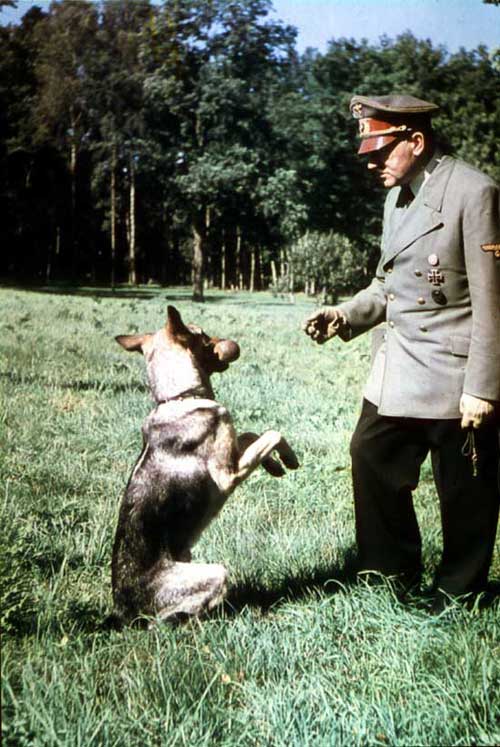
Hitler loved his dog Blondie. A dog trainer had schooled Blondie so well that Hitler was in awe of the precocious canine’s discipline and intelligence. What particularly amazed him — and he delighted in showing this to guests — was how Blondie would sing on command. He’d say, “Sing, Blondie,” and the dog would emit a yodel-like howl. But that is not all. He would then say, “Lower, Blondie,” and his beloved four-legged friend would drop an octave and “sing” in a deep tone “like Zarah Leander.”
All who surrounded Hitler knew of his pride and affection for Blondie. He bragged on the tricks she could perform. He kept her by his side most of the time. She even slept in his bedroom in the bunker. Then, as the Russians closed in, Hitler fed Blondie cyanide. He killed his dog not to spare her from any of the ravages which might follow defeat, not to spare her from hunger or deprivation or disease. Rather, he had begun to suspect that the cyanide Himmler had supplied for Hitler’s own suicide might be fake. So the Fuhrer, who had already sacrificed his entire nation to his own vanity, killed his dog to make sure that his supply of suicide tablets would work when the time came.

— testimony of Traudl Junge from the documentary, Im toten Winkel – Hitlers Sekretärin (Blind Spot – Hitler’s Secretary) 2002, directed by Andre Heller and Othmar Schmiderer. This documentary won top honors at the Berlin International Film Festival and the Chicago International Film Festival.
Are Pet Owner’s Healthier? Maybe Not. . .
February 2, 2008
Fuzzy Science
By January W. Payne
Washington Post Staff Writer
Tuesday, January 16, 2007
People spend billions annually on their pets — feeding, grooming, even clothing their animals. They play with them, sleep with them, approve surgery for them and mourn for them, much as they would for people.
But does owning a pet make people healthier? Popular assumptions notwithstanding, science is still out on that question.
A new study out of Finland suggests the answer may be no. Pet owners, the study finds, smoke cigarettes more but drink alcohol less than those without pets. They also have a higher body mass index (BMI), a ratio of weight relative to height. Pet owners spend slightly less time playing organized sports than non-owners but take part more often in such activities as hunting, fishing and boating. Pet owners are also less likely to report having good health than non-owners.
The findings point in a different direction from many previous studies, which have suggested that pet owners enjoy such health advantages as lower cholesterol, triglyceride and blood pressure than non-owners, even after accounting for such variables as exercise. Previous studies also have shown that owning pets may relieve feelings of loneliness and encourage pet owners to exercise more, spend more time outdoors and socialize more, according to the Centers for Disease Control and Prevention.
But this area of research is filled with inconsistencies, with one study’s findings often contradicting another’s.
And because many of the studies are of poor quality and not much funding goes to finding new answers, said James Serpell, director of the Center for the Interaction of Animals and Society at the University of Pennsylvania School of Veterinary Medicine, “much of this is speculation”– meaning more research needs to be done to find definitive answers. What seems most promising, he said, is the idea that pets offer social support — something that can affect how people deal with stress, which is known to impact health.
“At some level it seems obvious to me [that pets are] providing exactly the same types of support as” other social networks, including family and friends, Serpell said. Still, “while we like our friends and our family, they’re likely a source of conflict, but most animals are not. Most animals give but don’t take much.”
Gold-standard evidence of pets’ benefits to human physical and mental well-being may be scant, but examples of their use for health purposes are not. For decades, household animals have been used to assist patients with medical conditions such as blindness or seizures, as well as to relieve depression and social isolation. But when the National Institutes of Health last thoroughly explored the health benefits of pet ownership 20 years ago, its experts hedged.
“Persuasive evidence was presented to conclude that pets are likely to be medically beneficial to some people’s health,” they wrote in a consensus statement. “However, much is to be learned about many of these relationships before broad generalizations of medical benefit can be made.” No comparable group of experts has since been convened to reexamine the question.
The health differences found between pet owners and non-owners in the Finnish study, published in December in the online medical journal PLoS ONE, were small and may not apply to Americans, the authors say. What’s more, the study found a “difference only in the proportions of people reporting ‘good perceived health’ and not in the proportion reporting ‘bad health,’ ” said lead study author Leena Koivusilta, a researcher at the University of Turku, in an e-mail interview.
“We wanted to report the slight differences” between the pet owners and non-owners who both reported good perceived health “but, at the same time, to make sure that no ‘larger than life’ interpretations could be made,” Koivusilta said.
Her analysis was based on a survey of more than 21,000 Finnish people who responded to a questionnaire as part of a 15-year health and social support study. Eighty percent of those who had pets reported good perceived health, compared with 82 percent of those without pets. Twenty-eight percent of pet owners smoked regularly, compared with 23 percent of non-owners; 33 percent of pet owners smoked occasionally, compared with 32 percent of non-owners; and 39 percent didn’t smoke, compared with 45 percent of non-owners.
But overall, pet owners in the study also were less educated than non-owners, suggesting that any health benefits observed might be due to socioeconomic status rather than pet ownership, the researchers said.
“The grand message of the study could be that pets provide us all with a vast potential for health promotion as has been shown previously,” Koivusilta said. “Walking your dog makes you feel better, for your sake and for your hairy friend’s sake, and perhaps also helps you to lose some weight.”
Some research has suggested that pets offer social support that acts as a stress reliever, which affects health. One such study, published in 2001 in the journal Hypertension, found that pet owners had lower blood pressure readings when undergoing mental stress than people who did not own pets.
A 1995 American Journal of Cardiology study reported that dog ownership by men was associated with decreased risk of death within one year of a heart attack, compared with those who didn’t own dogs. A 1999 Journal of the American Geriatric Society study found that men and women who owned a pet scored better on a scale that measures the ability to complete daily tasks — such as bathing and dressing themselves, preparing food and walking several blocks — than peers who didn’t own a pet.
In 2005 BMJ (formerly the British Medical Journal) published a review examining studies that helped popularize the idea that pet ownership positively affects human health. The review found that while some studies reported pet-owning benefits such as better physical and psychological well-being in the elderly and reduced risk of cardiovascular disease, many later studies failed to confirm these findings.
Given this inconsistency, the BMJ review suggested that researchers focus less on whether owning a pet offers measurable health benefits and instead on how pets affect individual quality of life and how humans are affected by a pet’s death.
Future research also should tackle more specific questions, gleaned from what’s already known. “If pets are another form of social support, [then] we should start to ask more directed kinds of questions about the kinds of people who would be more likely to benefit from having a pet — maybe the kinds of people who don’t have a strong social support network,” Serpell said.
Heroin Puppies
February 2, 2008
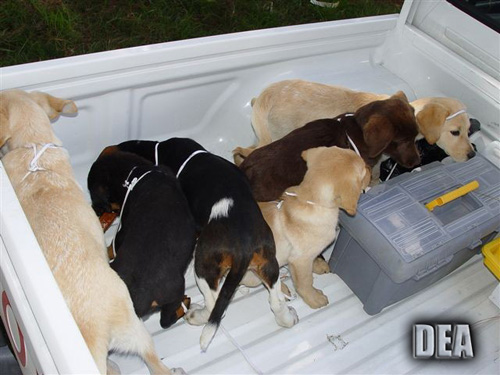
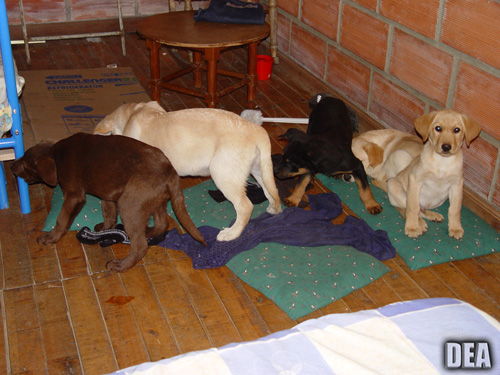
Heroin Traffickers Used Puppies to Smuggle Drugs Medellin-based Organization Surgically Implanted Packets of Heroin in Pure-Bred Dogs
Feb. 3, 2006: The DEA arrested 22 heroin traffickers based out of Medellin, Colombia, who used puppies to smuggle drugs. The drug traffickers surgically implanted packets of liquid heroin into purebred dogs. All of the puppies who survived were adopted by local families and are still doing well today.
DEA has received numerous calls concerning the fate of the puppies who survived the horrific deeds of drug smugglers. Many of the callers expressed interest in adopting the dogs. We are pleased to report that all of the puppies have been taken in by Columbian families and are in great health. The public reaction to this story has been overwhelming. We thank you all for your interest.
— from the DEA’s website

PETA Killed 97 Percent of ‘Companion Animals’ in 2006
February 2, 2008
Death toll up to 17,400; overdue report describes PETA’s deadliest year ever
WASHINGTON, Jan. 10, 2008 /PRNewswire-USNewswire/ — An official report from People for The Ethical Treatment of Animals (PETA), submitted nine months after a Virginia government agency’s deadline, shows that the animal rights group put to death more than 97 percent of the dogs, cats, and other pets it took in for adoption in 2006. During that year, the well-known animal rights group managed to find adoptive homes for just 12 pets. The nonprofit Center for Consumer Freedom (CCF) is calling on PETA to either end its hypocritical angel-of-death program, or stop its senseless condemnation of Americans who believe it’s perfectly ethical to use animals for food, clothing, and critical medical research.
Not counting animals PETA held only temporarily in its spay-neuter program, the organization took in 3,061 “companion animals” in 2006, of which it killed 2,981. According to Virginia’s Department of Agriculture and Consumer Services (VDACS), the average euthanasia rate for humane societies in the state was just 34.7 percent in 2006. PETA killed 97.4 percent of the animals it took in. The organization filed its 2006 report this month, nine months after the VDACS deadline of March 31, 2007.
“Pet lovers should be outraged,” said CCF Director of Research David Martosko. “There are thousands of worthwhile animal shelters that deserve Americans’ support. PETA is not one of them.”
In courtroom testimony last year, a PETA manager acknowledged that her organization maintains a large walk-in freezer for storing dead animals, and that PETA contracts with a Virginia cremation service to dispose of the bodies. In that trial, two PETA employees were convicted of dumping dead animals in a rural North Carolina trash dumpster.
Today in Southampton County, Virginia, another PETA employee will face felony charges in a dog-napping case. Andrea Florence Benoit Harris was arrested in late 2006 for allegedly abducting a hunting dog and attempting to transport it to PETA’s Norfolk headquarters.
“PETA raised over $30 million last year,” Martosko added, “and it’s using that money to kill the only flesh-and-blood animals its employees actually see. The scale of PETA’s hypocrisy is simply staggering.”
To speak with a spokesman, contact Tim Miller at 202-463-7112.
For more information about PETA’s massive euthanasia program, visit http://www.PetaKillsAnimals.com
http://www.consumerfreedom.com/
Balthasar and the Night Janitor
February 2, 2008
“Dogs are even able in old age to develop lasting and deep attachments if their love and bonding are reciprocated. . .One very sweet mutt, Balthasar, escaped from his new master three times and came back to us at the university, and so we were stuck with him. We thought he bonded with us so strongly that he was unable to develop new attachments. Thus, Balthasar became the watchdog at the Göd research Station, which made everybody, including him, very happy. One day, when he was twelve years old and had to be considered a rather old dog, the research station hired an elderly person as night janitor and superintendent. One day I was looking for Balthasar in vain. My colleagues told me that recently he started to leave in the mornings with the night janitor, only to return to ‘job’ at night. I learned from the group that Balthasar and the old janitor got to like each other quite a bit. “Just think,” they said, “they sleep together and he even buys Balthasar hot dogs.” Unfortunately, this relationship lasted only a few months, because the night janitor became ill, had to be hospitalized, and eventually died. In spite of this, Balthasar would disappear from time to time, particularly in the mornings. We tracked down what he was doing during his absences, and found that he would cross the busy highway, got to his adoptive master’s old house in the village, and sit in front of it for hours.”
– from If Dogs Could Talk; Exploring the Canine Mind by Vilmos Csányi, translated by Richard E. Quandt, North Point Press, Farrar, Straus and Giroux, New York, NY, 2005. Originally published in 2000 by Vince Kiadó Kft., Hungary
Descendants of Wolves
February 2, 2008
Professor Robert Wayne of the University of California plus and eight-person research team. Took mitochondrial DNA samples from 162 wolves and 140 dogs North America, Europe, Asia and the Arabian peninsula. Mitochondrial DNA is inherited from mother to child. It is especially suited to analyze genetic lines that result from mutation over long periods. Dog and wolf DNA differ by only 12 mutations; dogs and jackals and prairie wolves differ in 22 places. This proves that contemporary dogs are descended from wolves exclusively. The split between dogs and wolves occurred around 135,000 years ago, about the same time as our own species appeared, Homo sapiens. However canine varieties that had a skeletal structure different form wolves show up around 14,000 to 20,000 years ago. The belief today is that the pre-canine ‘tame’ wolves differed at first only behaviorally from their counterparts in the wild.
– from If Dogs Could Talk; Exploring the Canine Mind by Vilmos Csányi, translated by Richard E. Quandt, North Point Press, Farrar, Straus and Giroux, New York, NY, 2005. Originally published in 2000 by Vince Kiadó Kft., Hungary
How is your Dog’s Mind Activated?
February 2, 2008
“I believe that it is characteristic of the minds of dogs that they can think only about something that we activate in their minds: a ball, a leash, a few words, and the dog’s mind goes to work full steam. If everybody is busy with something else, the dog lies down, snoozes, and its mind just flickers at its lowest setting. I believe that dogs have taken the first step towards a more enduring wakefulness, and this is underscored by the fact that they easily learn rituals, because the elements of rituals assist in the activation of the mind. They have also developed a keen sense of time and it is easy to teach them a ritual that has to be carried out at a particular time.”
— from If Dogs Could Talk; Exploring the Canine Mind by Vilmos Csányi, translated by Richard E. Quandt, North Point Press, Farrar, Straus and Giroux, New York, NY, 2005. Originally published in 2000 by Vince Kiadó Kft., Hungary
The AKC Canine Good Citizen Test: the details
February 2, 2008
Owning a dog has certainly become more complicated in the past twenty years. “Anti-dog legislation” prohibiting ownership of specific breeds in certain municipalities, no pets housing and the proliferation of “NO DOGS ALLOWED” signs in public places are just a few of the hurdles to be overcome by those who wish to own a canine companion.
In an effort to promote responsible dog ownership, The American Kennel Club conducts the Canine Good Citizen program to demonstrate that dogs, as companions of man, can be respected members of the community. The goals of the program are to educate dog owners about the benefits of well-behaved pets and demonstrate to the general public that dogs can be upstanding members in the community.
The Canine Good Citizen Program consists of a ten-step test which reproduces everyday situations which might be encountered by a dog and owner. The test is not competitive–each dog and owner team are individually assessed on a pass/fail basis for each of the steps. Dogs passing all ten steps receive a certificate from the AKC and are officially awarded the Canine Good Citizen title which gives the owner the right to use the letters “CGC” after his/her dog’s name.
Here is an outline of the CGC Test steps:
1. Accepting a Friendly Stranger
This test demonstrates that the dog will allow a friendly stranger to approach it and speak to its owner in a natural, everyday situation. The evaluator and owner will shake hands and exchange pleasantries. The dog must show no sign of resentment or shyness and must not break position or try to go to the evaluator.
2. Sitting Politely for Petting
This test demonstrates that the dog will allow a friendly stranger to touch it while it is out with its owner. The evaluator pets the dog and then circles dog and owner. The dog must not show shyness or resentment.
3. Appearance & Grooming
This practical test demonstrates that the dog will welcome being groomed and examined and will permit someone other than his owner to do so. It also demonstrates the owner’s care, concern and responsibility. The evaluator inspects the dog, then combs or brushes the dog lightly, examines the ears and each front foot.
4. Out for a Walk (on a loose leash)
This test demonstrates that the owner is in control of the dog. The dog must be on the left side of the owner, but need not be in the heel position. There must be a left turn, a right turn and an about turn with at least one stop in between and another at the end.
5. Walking Through a Crowd
This test demonstrates that the dog can move about politely in pedestrian traffic and is under control in public places. The dog may show some interest in the strangers, without appearing over exuberant, shy or resentful.
6. Sit and Down on Command/Staying in Place
This test demonstrates that the dog has training, will respond to the owner’s command to sit and down and will remain in place commanded by the owner. The owner may take a reasonable amount of time and use more than one command.
7. Coming When Called
This test demonstrates that the dog will come when called by the handler. The handler will walk 10 feet from the dog, turn to face the dog, and call the dog. The handler may use encouragement to get the dog to come. Handlers may choose to tell dogs to “stay” or “wait” or they may simply walk away, giving no instructions to the dog as the evaluator provides mild distractions (e.g. petting).
8. Reaction to Another Dog
This test demonstrates that the dog can behave politely around other dogs. Two owners and their dogs approach each other from a distance of about ten yards, stop, shake hands and exchange pleasantries, and continue on for about five yards. The dogs should show no more than a casual interest in each other.
9. Reactions to Distractions
This test demonstrates that the dog is confident at all times when faced with common distracting situations. The dog may express a natural interest and curiosity and may appear slightly startled, but should not panic, try to run away, show aggressiveness or bark.
10. Supervised Separation
This test demonstrates that the dog can be left with a trusted person, if necessary, and will maintain its training and good manners. Evaluators are encouraged to say something like, “Would you like me to watch your dog?” and then take hold of the dog’s leash. The owner will go out of sight for 3 minutes. The dog does not have to stay in position, but should not continually bark, whine or pace unnecessarily, or show anything stronger than mild agitation or nervousness.
The story of RCA’s Nipper: His Master’s Voice
February 2, 2008
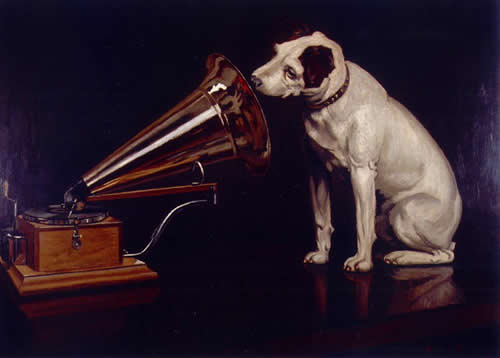 Nipper, (1884-1895) the fox terrier on His Master’s Voice label (RCA) was the dog of an English painter, Francis Barraud (1856-1924). His painting, and the rights to reproduce it, was sold for one hundred pounds. Click on painting for larger view.
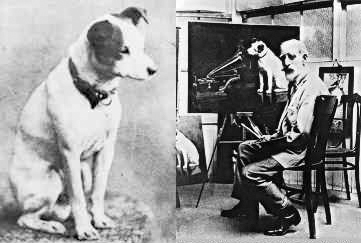
The only known photograph of Nipper (left) and Frances Barraud (right) working on one of the 24 copies of “His Master’s Voice” that were commissioned by the Victor Company.
— from The Difficulty of Being a Dog, by Roger Grenier (translated by Alice Kaplan), The University of Chicago Press, Chicago, 2000.