
Hypoallergenic Dogs: “No Such Thing” says Recent Study
July 17, 2011
First, the caveats: as everyone should know by now, science does not consist of a single study. This one, by the Henry Ford Hospital in Detroit, found no scientific evidence that allegedly “hypoallergenic” dogs produce fewer allergens than other breeds.
The study sampled 173 homes with 60 different breeds of dogs, including 11 breeds considered hypoallergenic: Beddington Terrier, Bichon Frise, Chinese Crested, Irish Water Spaniel, Kerry Blue Terrier, Maltese, Poodle, Portuguese Water Dog, Schnauzer, Soft Coated Wheaten Terrier, and Xoloitzcuintli.
What are people allergic to? It’s not the fur or hair that accumulates throughout the house, it’s the dander, or dried flakes of your dog’s skin. Specifically, the allergen is a protein, found in both canine saliva and urine, that sticks to these dander flakes. That’s what causes the stuffy-runny nose-achy-sneezing-coughing reaction in humans.
One of the theories is that dogs who shed less or have hair that must be cut produce less dander, hence the current popularity of the cross-breed Labradoodle. The takeaway is that you may be able to reduce the effect somewhat, there are no dogs that are 100% allergen-free.
For more information, read this post on The Week’s site: “The ‘myth’ of hypoallergenic dogs.”
Canine Cuisine in China – “Fragrant Meat” CAUTION: Graphic Images
July 7, 2011
OK, this is something that I have a very hard time dealing with. Last month, June 2011, there was a week-long food festival in Yulin, China for which over 15,000 dogs were slaughtered, sauteed and served.

I’m a dog person and, of course, I have an extreme emotional reaction to seeing dogs consumed as food.
As an omnivore, however, who just finished a dinner that included Baby Back Ribs it feels hypocritical to pass judgement. Intellectually, I find it hard to condemn. In our culture we see dogs as companions, not livestock. Dogs live in our homes with us, cattle do not. If you do any research at all into current “factory farming” techniques the treatment of pigs, cattle and chicken will likely turn your stomach.
Even if you’re a vegetarian dog owner, I think you will ultimately have to admit that the selection of what animals to eat is a cultural, not an ethical issue. For another point of view on this issue, you need to read the work of Peter Singer. He makes a very strong case that all meat consumption world-wide should be abolished.

Some research has shown that pigs have an intelligence that is almost the same as dogs, though they are not as trainable. When speaking about the emotional lives of animals, is it conceivable to you that pigs don’t experience fear as they approach the slaughter house? Yet very few of us think of this when we consume crunchy, delicious bacon.

I also believe there’s something here that relates to compassion fatigue. The image of one starving child is heart-wrecnching. The news that 40 people have been killed by a suicide bomber in the Middle East is just another depressing statistic. I think this is just part of how we are hard-wired, neurally.
Is it necessary to eat dog as a source of protein? Probably not. I’ve read that the world produces enough food globally to feed the planet, the problem is with distribution (and over consumption in the developed world).
Let me be perfectly clear: I’m against eating dogs for food. But I don’t think those who do are less evolved morally, or somehow deficient in compassion. Let me know your opinions/conclusions in the comments section.
– Canine images (top and bottom) from the UK’s Daily Mail.
War Dogs – from Christopher Columbus to Osama Bin Laden
May 8, 2011
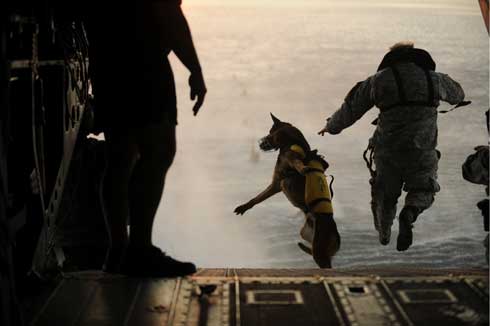 I’m not much of a reader of Foreign Policy magazine but I must say I’m knocked out by Roberta Frankel’s selection of images for her piece War Dogs. See the entire article here.
We’re on about the subject today because of Cairo, a Belgian Malinois war dog that was used by the Navy SEALS during Operation Neptune Spear, the raid that killed Osama Bin Laden.
Cairo the dog was, of course, named after Peter Lorre’s character in the film of The Maltese Falcon, Joel Cairo. The SEALS are well known to be huge Dashiell Hammett fans, while the Marines have always preferred the hard-boiled poetry of Raymond Chandler. I don’t know what the grunts in the Army read.
But even Elmore Leonard could tell you that shortly after their domestication dogs were put to use as weapons of war. During the Viet Nam War, scout dogs are credited with saving 10,000 troops. Too bad that when we pulled out, these same dogs were classified as ‘surplus material’ and left behind (where their efficiency earned them a bounty from the Viet Cong).
After he sailed the ocean blue Columbus used mastiff-sized dogs to help him conquer the Indigenous Peoples of the Americas. It’s reported that his men would give a native each night to their war dogs to devour as dinner. The Romans had entire units composed of dogs with spiked collars and metal armor. More recently the Russians used 40,000 dogs during WWII in various roles, including anti-tank weapons. The dogs were kept hungry and fed only under Soviet tanks. The first idea was that the dog would release a bomb then return to its handler who would detonate it remotely.
This training program had very mixed results so they decided to kept it simple and stupid. Now there was an 8 inch wooden lever sticking up from the top of the pack the dog was wearing. When the dog went under the chassis of the tank, this lever would strike the bottom of the tank and detonate. But even this didn’t work because to save fuel and ammunition most dogs were trained under parked Soviet tanks without gunfire.
Plus the Soviet tanks were diesel and the German tanks gasoline so the dogs had a tendency to run towards the familiar-smelling Soviet tanks.
And if a dog wasn’t wounded or killed in the battlefield they, of course, ran back to the home front where the explosives destroyed them along with their two-legged co-combatants. So any dog returning would have to be shot by its own troops and some soldiers rebelled against this instance of killing during wartime. Nazi propaganda made much of the desperation that drove the Soviets to this inefficient tactic.
Today’s war dogs are both highly trained mission specialists and expensive tech. They are treated like members of the team, not four-legged bomb delivery systems.

While DC Comics character Sgt. Rock has always maintained that WAR IS HELL (and I believe him), there’s just no place we won’t bring our dogs.
Add Canned Salmon to Your Dog’s Kibble – A Great Inexpensive Supplement
May 4, 2011
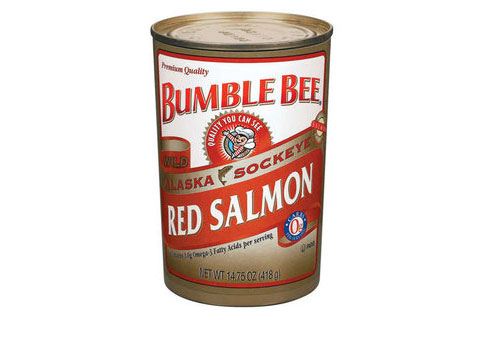
Want a relatively inexpensive way to greatly supplement your dog’s diet? Try adding the oil and some fish from a can of Bumble Bee Alaska Sockeye Red Salmon. Pet nutritionists call this ‘top-dressing’ your kibble and it’s an easy way to start give your dog some less processed nutrition.
We regularly give our two Labradors a couple of tablespoons of whole milk yogurt (for both its probiotics and gas-emission reduction qualities); raw eggs, baby carrots, banana and other fruits and veggies, along with table scraps mixed in with their meals.
We used to buy an expensive Grizzly Salmon Oil All-Natural Dog Food Supplement that retails for $40 for 32 oz.
Now we’ve been adding this Sockeye Red Salmon that we get at our local B.J.’s, 2 cans for $9 for 29.5 oz. of fish and oil. We get more than just the salmon oil at a much lower price. We give it to them 3 to 4 times a week. Our dogs just love it.
Of course, they loved having their kibble drizzled with the Grizzly Salmon Oil, too. In no way do I want to knock that product. If you’ve got the cash, go out and buy a bottle right now. But in today’s economy, we’re looking to stretch every dollar we have to spend on our dogs.
By feeding them a quality kibble we know that they’re getting a balanced diet. By adding salmon as a supplement (or top-dressing) we know they’re getting all the benefits of the Omega 3 and Omega 6 fatty acids that add ouster to their coats as well as supporting their hearts and immune systems.
The take-away: this is a relatively inexpensive way to add significant health benefits to the food you’re already using. Give it a try.
Pet Dog Ownership to be Banned in Iran
April 25, 2011
According to the Daily Mail, the Iranian Parliment that will criminalize dog ownership has been drafted. The claim is that “impure and dangerous” dogs create a health problem and that dog ownership “poses a cultural problem, a blind imitation of the vulgar Western culture.” If the dogs are ‘working dogs’ and not considered pets, e.g. allowed in the home, they will skirt this ban.
Exceptions are allowed for guard dogs, sheep dogs and specially trained dogs like those that detect bombs or drugs or search and rescue dogs.
Of course, there’s the issue of the Muslim’s faith position on dogs. Some quick research reveals that they are considered ‘ritually unclean’ and the Sunni tradition holds that the prophet Muhammed did not like dogs. Having a dog counted against one’s good deeds in life, according to this view.
There are some bright spots in the Muslim take on animals in general, though. You are not permitted to mistreat them, beat them unnecessarily, mutilate them, brand them on the face or have them fight each other for entertainment.
From a Western point of view, where most dogs are pets in the home, this ban seems draconian. To deny the benefits of companionship and joy that we get from our dogs, even if they don’t contribute to the bottom line, throws in high relief the clash of cultures between the West and the Middle East. It also makes clear the difference between secular governments and those run by an established state religion.
The fact of this proposed ban makes me sad, followed immediately by concern over the fate of all the current pet dogs in Iran. How likely is it that they will be humanely disposed of?
But does any one of us in the West have a right to object? Just as hysteria has been fanned in the States about Sharia law being imposed on non-Muslims, we can’t really claim that banning pet dogs is not the right of Iranian Parliment. Their behavior is consistent with their beliefs.
And I think they are correct in their judgement that Western cultural values are in direct contrast to the kind of society they want to have. I just know how my life has been enriched by all the dogs that have passed through it. I imagine that every pet dog owner in Iran feels the same way.
“Madonna of the Mills” on HBO: The Fight Against Puppy Mills
March 21, 2011

If you’re knowledgeable about dogs you already know the horror of the Pennsylvania puppy mills that breed stock for pet stores that place profit above all else. If you’re not aware of the deplorable conditions that these dogs are forced to endure, you should make it a point to see the new documentary, Madonna of the Mills.
A Staten Island woman named Laura Flynn-Amato is the subject of this documentary. She’s just an ordinary dog owner who fell in love with a yellow Lab puppy in a pet store in a mall, bought him and brought him home. Shortly after that the seizures began.
It was while looking for answers to the health problems of her new dog that Laura learned about the puppy mills in Lancaster, PA. Determined to change things, this discovery led Mrs. Flynn-Amato to rescue almost 4,000 dogs over the past five years. Pretty impressive, by my lights.

Photo by Jan Somma-Hammel/Staten Island Advance
Here’s the take-away about puppy mills:
10 THINGS TO KNOW ABOUT PUPPY MILLS
- 99% of puppies sold in pet stores come from puppy mills.
- Nearly 100% of all puppies in pet stores have parasites when they are purchased.
- 48% of puppies being sold in pet stores were ill or incubating an illness at the time of purchase, according to a recent California study.
- 500,000 puppies are born in puppy mills and sold in pet stores every
year in the United States. - There are 35,000 pet stores in America
- Puppy millers can make more than $300,000 growing puppies every year.
- Puppy mills have been around since the early 1960s.
- Almost every puppy sold in a pet store has a mother who will spend her entire life in a tiny cage, never being petted, never being walked, never being treated like a dog.
- Female dogs are usually bred 2x a year. At that rate, they usually burn out by age 5, at which time they are put to death.
- About 1 million breeder dogs are confined in puppy mills throughout the country.
Helpful Websites for Dogs with Behavioral Problems
December 15, 2010
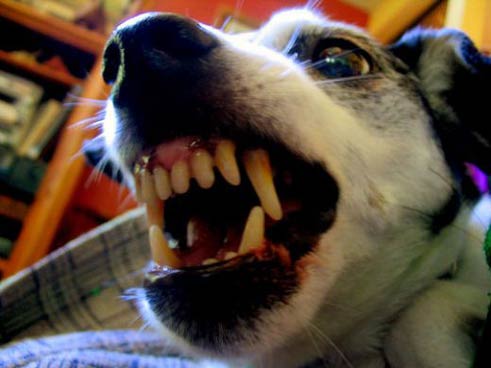 Too many dogs are surrendered to shelters or simply abandoned due to behavioral problems. This, along with the sometimes suspect ‘I’m moving and can’t take my dog,’ are the top two reasons Animal Control Officers all across the country hear from people who are giving up a dog.
I believe an awful lot of these problems could’ve been dealt with before they got to the abandonment stage if owners would use consistent, positive training methods. If there aren’t qualified dog trainers in your area, there’s a wealth of information online. I’ve compiled a list of a dozen free resources below.
Yes, some behavioral problems may be beyond your ability to cope with. But all too often owners give up with only minimal attempts to bring about positive change. Almost any behavioral problem can be improved, whether it can be modified enough to solve the issue or bring relief to the harried owner is the question. Don’t give up too soon!
Virtual Pet Behaviorist created by the American Society for the Prevention of Cruelty to Animals
Certification Council for Professional Dog Trainers
How to Stop Agressive Dog Behavior
Rescue Dog Behavior Problems from the National Animal Interest Alliance
Dr. P’s Dog Training Library Scroll down to Header VI (Potential) Behavior Problems
Dogstar Daily – Behavior Problems
Dog Training and Behavior Articles from 4Paws University
Dog Problem Solving from Pet Expertise.com
Inside of a Dog: What Dogs See, Smell and Know
December 14, 2010
 I’ve been reading the excellent Inside of a Dog: What Dogs See, Smell and Know by Alexandra Horowitz. If you haven’t already, run out and buy this book! I’d give it my highest recommendation.
Since Ms. Hororwitz takes a scientific approach in fulfilling her subtitle you’ll learn a lot about your dog’s senses. About how sound and smell are more important than sight, for example. She also makes the point that of all the domesticated animals, dogs are the only one who regularly look us in the eye. Traditionally, the Window to the Soul, should you chose to believe in souls or spirits. Certainly, a window into another consciousness.
It’s true, of course, that a hard stare between two dogs can be read as aggressive and could be the prelude to a fight. But most of can easily tell the difference between and aggressive, challenging stare and the soulful gazing that occurs between primate and canines.
Visually dogs are dichromats having receptors for two color values (blue and yellow) as compared to humans who are trichromats with three (blue, blue-green, yellow-green). There’s a cool piece of Mac software called Sim Daltonism that’s a Color Blindness Simulator. If you select protanopia, (in humans we call this condition red-green color blindness) you’ll get an idea of what the world looks like to your dog. Click on the image below for larger size.

Dog DNA Database Used to Convict Murderer in England
December 3, 2010
The Times of London reports on a case where the use of a new companion animal DNA database helped place a murderer at the scene of his crime and led to his conviction. This is believed to be a world’s first. Read the complete article here.
In South London, as elsewhere, gang members routinely own aggressive dogs, sometimes referred to as “weapon dogs” or “status dogs.” While the penalties for committing a crime with a knife or a gun normally lead to a mandatory jail sentence, the law is much more lenient when to comes to convicting dog owners for the behavior of their charges. Yet an aggressive dog can do as much or more damage than a knife, and their very presence is intimidating.

The dog in this case was a Staffordshire Bull-Terrier, one of three related breeds (in the molosser group) we lump together and usually call pit bulls. Pit Bulls were bred at one time for bear baiting, an ‘entertainment’ that originated in England under Queen Elizabeth the First.
A bear would be staked in a pit and a group of dogs would be set up it, a ‘blood sport’, just as cruel and vicious as contemporary dog fighting rings.
In the same London neighborhood you could drink, hook up with a painted strumpet in a brothel or attend an original performance of The Winter’s Tale. The connection between these business was multi-layered: actors and theatrical impresarios like Philip Henslowe and his son-in-law, Edward Alleyn also owned bawdy houses where a man might catch the ‘French Welcome’ (syphilis). The most famous exit line in all theater is in The Winter’s Tale – just before the death of the character Antigonus, “Exit, Pursued by a bear.” Shakespeare was making a joke that his actors and audience would understand.
Salvation for Michael Vick’s Dogs – “The Lost Dogs” by Jim Gorant
November 3, 2010
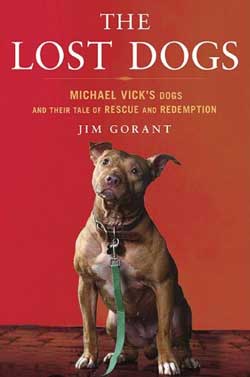
I’ve written before about the dogs of Bad Newz Kennels run by Michael Vick and must draw your attention to the excellent new book by Jim Gorant, The Lost Dogs: Michael Vick’s Dogs and their Tale of Rescue and Redemption. Gorant is the reporter who wrote the Sports Illustrated cover story (December 29, 2008) about this case and so was ideally positioned to do the extensive follow up in this book. That cover story generated more letters and emails than any other SI story that year, a measure of the outrage and controversy surrounding this case. A very few saw the attention paid here as disproportionate, or in the extreme, racist. I find it hard to sympathize with those views.
Of course, when a third of the world goes to bed hungry at night you can make the case that the sympathy and attention these dogs received is the luxury of the haves as opposed to the have-nots. Our indifference to human suffering can be appalling, but the fact that we cannot solve every problem should not prevent us from tackling the ones we can solve. And it’s hard not to see these pit bull and pit bull mixes as the unwilling, unfortunate victims of a callous blood sport.
That football itself is a brutal, violent game that generously rewarded Michael Vick for his skill says something else about what we value in our culture. But, as far as I’m aware, we don’t electrocute, hang, drown or shoot unsuccessful NFL players. (We do permit some of them to suffer massive head traumas that leave them with cognitive problems like memory loss, confusion, speech impediments, early onset Alzheimer’s, nausea, depression, blurred vision, headaches, the inability to concentrate and other neurological problems. However, 1.) Your average NFL player is not nearly as cute an adorable as your average American Staffordshire Terrier and 2.) They make a choice about their profession that pit bulls clearly do not).
The uplifting part of this story is that of 51 dogs recovered 47 have received second chances for a better life, the overwhelming majority of these dogs are now in loving homes as treasured companion animals. A few were too damaged to make the transition to pets and have been placed in animal sanctuaries. But when you consider that initially both PETA and the Humane Society called for all of these dogs to be destroyed, the recovery detailed in The Lost Dogs is simply amazing.
The capacity of a dog to accept kind treatment from the same species that brutalized them should be a lesson to us all about forgiveness and the capacity to change.
You’ll get the entire story of the investigation and subsequent trial of Michael Vick and the efforts of prosecutors, rescue groups and individuals who rose to the challenge presented by these damaged dogs. There are many heroes and a few villains (Gerald Poindexter, commonwealth attorney for Surry County in Virginia is certainly a candidate for that title).
One outstanding rescue group you’ll read about is BADRAP, Bay Area Doglovers Responsible About Pitbulls. For some compelling images of the Vick dogs, go here on their site.
Anyone who cares about dogs should read this book. It’s a gripping story and Jim Gorant has done an excellent job in bringing the entire cast, canine and human, to life in these pages. You will get to know some of the Vick dogs quite well and, if you possess any compassion whatsoever, their journey from abuse to safety will haunt you long after you finish reading. The dog owners among you will probably also want to hug your own dogs, tightly.