
Encyclopedia of American Loons
April 23, 2011

I like to describe myself as someone who was born skeptic and a half-century of life has made a cynic. I’ve been a subscriber to The Skeptical Inquirer for over 25 years and I never miss the weekly podcast The Skeptics’ Guide to the Universe. I’ve been reading about the false claims of alternative and complimentary medicine for more than half my life.
How does this affect my day-to-day interactions with the world? Well, when I took my 9 year old Labrador Retriever to a highly renowned and respected canine orthopedic surgeon to evaluate X-rays of his hips and lower back, the first “treatment” he recommended was acupuncture.
He told me he had a lot of anecdotes of owner’s reporting good results with this “therapy.” I couldn’t quite believe my ears. I replied, “OK, but why don’t we try voodoo first. That also uses pins and needles and has the same amount of scientific support.” He looked blankly at me. I continued. “You’re a surgeon and a man of science. Do I have to explain to you that the plural of anecdotes is not data?” You can imagine how well the rest of that appointment went.
On the topic of skepticism and those whose claims should be examined quite critically, I was delighted to find Fredrik Haraldsen who runs an interesting blog, the Encyclopedia of American Loons.
You’ve got to love his take on former Saturday Night Live comedienne Victoria Jackson: “[She] is a former semi-celebrity who is clinically unable to process information, distinguish an argument from a random string of letters (or none), reason, or string words together in a sentence expressing a coherent thought.”
Here’s an example of straight Jackson quoted by Haraldsen:
“ [Until the age of 40] I didn’t vote for anyone. I didn’t know how. I didn’t know where to go. I never saw a sign that said, ‘Vote Here.’ I didn’t know how to ‘register’ or even that I had to register. I didn’t know what the candidates stood for or how to find out. Word of mouth I guess, but no one I hung out with talked about politics, ever.”
Today, perhaps more than ever, we need someone to keep track of all the nonsense (and those who spout it) that clutters our 24/7 media cycle.
Thank you, Frederik Haraldsen. Unfortunately, I don’t think you’ll ever run out of material. But that makes it all the more important that you keep adding entries to your encyclopedia.
Lens Effects article from Shutterbug
March 30, 2011

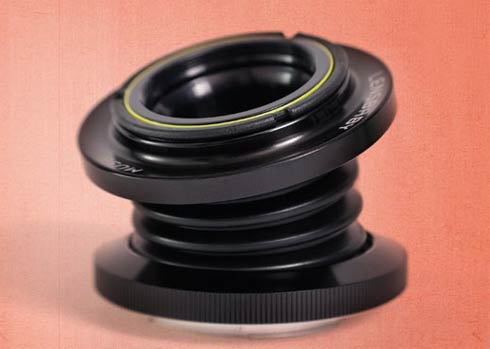
Jim Zuckerman of Shutterbug gives an excellent run-down of lens effects here. He covers the Lensbaby (pictured below), lens flare, star effects, zoom abstractions and a few filters. The entire Shutterbug site is filled with information, reviews, tips and how-tos. A good place to explore if you’re looking to solve a photographic problem or you’d like some inspiration.
“Madonna of the Mills” on HBO: The Fight Against Puppy Mills
March 21, 2011

If you’re knowledgeable about dogs you already know the horror of the Pennsylvania puppy mills that breed stock for pet stores that place profit above all else. If you’re not aware of the deplorable conditions that these dogs are forced to endure, you should make it a point to see the new documentary, Madonna of the Mills.
A Staten Island woman named Laura Flynn-Amato is the subject of this documentary. She’s just an ordinary dog owner who fell in love with a yellow Lab puppy in a pet store in a mall, bought him and brought him home. Shortly after that the seizures began.
It was while looking for answers to the health problems of her new dog that Laura learned about the puppy mills in Lancaster, PA. Determined to change things, this discovery led Mrs. Flynn-Amato to rescue almost 4,000 dogs over the past five years. Pretty impressive, by my lights.

Photo by Jan Somma-Hammel/Staten Island Advance
Here’s the take-away about puppy mills:
10 THINGS TO KNOW ABOUT PUPPY MILLS
- 99% of puppies sold in pet stores come from puppy mills.
- Nearly 100% of all puppies in pet stores have parasites when they are purchased.
- 48% of puppies being sold in pet stores were ill or incubating an illness at the time of purchase, according to a recent California study.
- 500,000 puppies are born in puppy mills and sold in pet stores every
year in the United States. - There are 35,000 pet stores in America
- Puppy millers can make more than $300,000 growing puppies every year.
- Puppy mills have been around since the early 1960s.
- Almost every puppy sold in a pet store has a mother who will spend her entire life in a tiny cage, never being petted, never being walked, never being treated like a dog.
- Female dogs are usually bred 2x a year. At that rate, they usually burn out by age 5, at which time they are put to death.
- About 1 million breeder dogs are confined in puppy mills throughout the country.
Holga Camera Mods
March 20, 2011
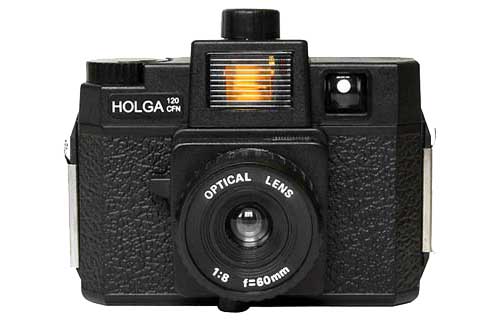
Otto Kitchens is a photographer who has fallen in love with the Holga, a cheap medium-format film camera with a plastic lens originally made in Hong Kong in 1982. Follow his story, and see the artistry that can be achieved with a 25-year old ‘toy’ camera at the New York Times photography blog Lens, here.
For more information, history and a place to buy Holga’s and modified Holga’s check out Lomography’s Holga pages, here. Lomography is an interesting a site dedicated to experimental, analog film cameras and their fans.
If you don’t want to give up the convenience and low cost of your digital camera, you can duplicate the effects of many ‘toy’ cameras with the Mac/Windows app Lo-Fi, retro photography made E-Z.
Tilt/Shift Photography Explained
March 20, 2011
Laurent Hoffman explains Tilt/Shift photography at The Creators Project blog. If you saw last year’s The Social Network you saw an example of this technique applied to cinematography in the opening of the Henley Royal Regatta scene with the Winklevoss Twins (see screen capture below).

Actually, what was done in The Social Network was more precisely miniature faking, which mimicked the still photo process of tilt/shift.
The top and bottom horizontal sections of a tilt/shift image are slightly out of focus and the middle third of the image gives an effect of miniaturization. Smashing Magazine has some outstanding examples of tilt/shift photography on their site, here.

Click on image above for larger size.
Demand Media, Content Farms and the End of Journalism?
February 23, 2011
Know who Demand Media is? Ever visit a Content Farm? (No, but isn’t that where my parents said they were sending my hyperactive puppy?).
Think the decline in American journalism is an irreversible slide into screaming pundits, extremism, the rise of citizen-journalists spewing their Idiot Wind across the InterWebs, then being aggregated by the Huff-Po, as if it all mattered?
Will news become 1% content and 99% commentary? And just how many rhetorical questions can I crowd into a single post?
The following infographic, designed and illustrated by Ricky Linn, will answer all your Demand Media questions. . .
HDR – High Dynamic Range Photography without a Tripod
February 11, 2011

Click on image for larger size.
If you’ve got a camera with a very fast shutter speed, you may be able to take the separate exposures needed for an HDR image without a tripod. How can that be possible? It’s explained here by George Schaub at Shutterbug.com.
High dynamic range images may seem gimmicky to some but they do reproduce a photograph that comes far closer to what we perceive when we view a scene with our eyes; they’re constantly making exposure and white balance adjustments that are impossible to capture in any single exposure.
Make Halloween Shrunken Heads from Apples
February 9, 2011

Of course, IT WOULD BE WRONG to use authentic South American Jívaro tribal methods to actually decapitate and shrink the head of the person most annoying you AT THIS VERY MOMENT. The finished shrunken head is called a tsantsas and if you follow the link above you’ll find the process easy and enticing. Really, just a perfect weekend project and the tools needed are rudimentary. So simple. So satisfying. BUT IT WOULD BE WRONG. Click on image above for larger size.
However, we can safely and, without committing felony murder, satisfy this urge by making a Shrunken Head Apple Halloween Decoration. Isn’t Halloween great? It’s my favorite holiday. I’d never even considering decapitating anyone. Honest.

Stereo Diableries
February 7, 2011
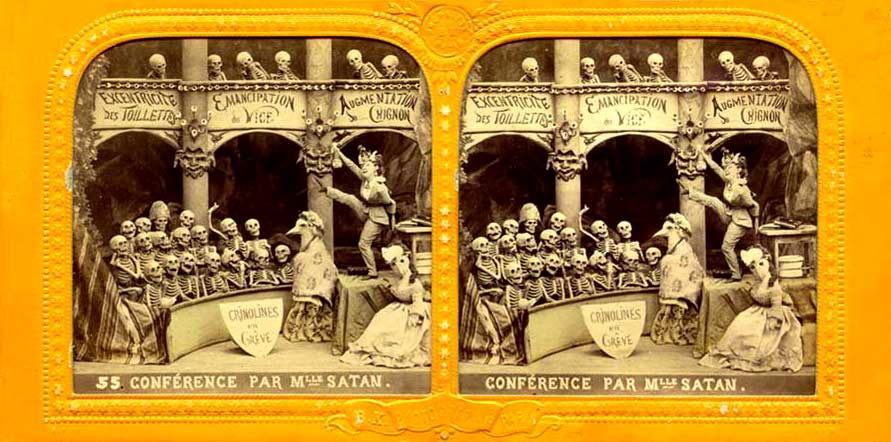
Diableries are defined as “representations of devils or demons, as in painting or fiction.” In 19th century France there were a popular series of Holmes-style stereo cards produced (the exact number of images or sets of images is still under investigation) that are commonly referred to as Diableries. The images represent satirical scenes combining small plaster figures of devils and skeletons and other hand-crafted elements which were then photographed by a stereo camera. – Click on image above for larger size –
Brian May (with Elena Vidal) author of the superb A Village Lost and Found about 19th century english stereo photographer T. R. Williams is said to be working on a book about stereo diableries. We can’t wait! But in the meantime you can peruse the Early Visual Media web site of Thomas Weynants for more background and many more superb images.
Design Tools Monthly – Essential for All Designers
January 26, 2011

I can’t believe that I’ve never written up Design Tools Monthly (though I have featured info from them in the past). DTM is billed as “The Executive Summary of Graphic Design News” and I’ve been a subscriber for more than a decade (they began back in 1992). It is that summary and much more.
They used to have a pitch on their mailing envelopes that presented two options: you can spend all your time keeping current with all the new software, hardware and graphic design news OR you can make a living doing graphic design and read DTM. I think that is on the money.
I’m a long time subscriber to MacWorld, Mac|Life (formerly MacAddict) and Photoshop User (published by the National Association of Photoshop Users) and between them they do a pretty good job on keeping me informed about Mac-specific news.
But DTM monitors those magazines (and websites) and a host of others, including Creative Business, Graphic Design:USA, InDesign Magazine, CreativePro.com, MaxFixIt, MacInTouch, MacNewsNetwork, The Mac Observer, MacUser, InDesign Secrfets, Planet Quark, MacUpdate and Web DesignNews.
In addition to the monthly newsletter editor Jay Nelson and contributor Jeff Gamet host a free podcast Design Tools Weekly that covers some of the same items you get when you subscribe.
If you are a designer, you simply must check DTM out. On their website you can get a free PDF of a sample issue to help you decide. There’s also a reduced subscription rate for freelancers, teachers and students.
